
Tintype Animals
Humans have been photographed with their pets since the beginning of photography in the 1800s. The following images are from the late 1800s and early 1900s that show what we already know, us humans love our fluffy buddies.


The only real difference is that now we have animal auto focus tracking and high frames per second capable cameras to assist us in capturing the perfect moment.
But the purpose of this little post is to bring it back into the days of photography yesteryear and provide some information on having your pet photographed in my little studio using the wet plate collodion photographic technique.

Ruby’s 1st Tintype Portrait
The first tintype I made featuring an animal was when the wet plate process was pretty new to me and I was making portraits of my wife & our supper, Ruby, on the front porch of our house.
Using the sun as a light source required an exposure of about 4 seconds. I had Ruby’s attention and I removed the lens cap and started counting out the exposure. “One Mississippi, two Mississippi, three Mississippi..” with a second remaining someone locked their car door making a honk sound, which captured Ruby’s attention and caused the soft appearance of her little face.
This is one of our most favourite photos of Ruby, even with her little face being blurred in the tintype.
This taught me to lower my expectations when making pet portraits and know that their humans will definitely love the resulting image, imperfections and all.
Now that is not to say that I won’t be trying everything I can to create the absolute best portrait of your pet, but know that it increases the difficulty of an already temperamental photographic process.
Subsequent tintypes of Ruby were made using studio flash. And we love them, but the first one is still our favourite.


Here are some thoughts to consider when deciding if you want your little buddy to be a part of your tintype session in my little studio:
Safety
The number one priority for me is always whether it is safe for the animal to be included in the portrait. This mostly will be your call after you assess what is required for this. You know your pet best.
The studio is a small space with a lot of items in it. Puppers can boop my camera stand, leg, shelves, backdrop and bench to get familair with them. But they should be under owners control as in the darkroom there may be drips of chemistry on the floor that I wouldn’t want them to touch. I do my best to keep everything clean but cannot guarantee it.
The photo is made with bright flashes that do make a sound when they activate and they have large reflectors attached to them. They can make animals a bit nervous and the sound can startle them aggravating that nervousness. It is because of this that I will not continue to make plates chasing the perfect image as it can be pretty stressful for a nervous pet. The goal is to do the one shot and once over the pet can relax and have a treat.
I do not recommend giving pets pills to help them relax, unless that is something they normally take.
Posing
I don’t expect anyone’s pet to be a model. However, to be able to get them in focus in the image I will need them to be able to sit or be held without too much squirming and movement for about 10 seconds.
And the standard rule that their face needs to be as close as possible in line with your face to get you both in focus. There are a few techniques I can use with my camera to assist with that, but they cannot overcome any distance between. My studio is quite small so there is no possibility of a full body portrait of you with your furry best friend sitting at your feet.
The best posing options for pets are to be held by the owner (if they are of the compact variety) or sitting next to them on the floor or on my studio bench.


Some chill pets will be able to sit and stay long enough where they can have a classic solo portrait made. These can look great with a shallow depth of field only obtainable in singles portraits.


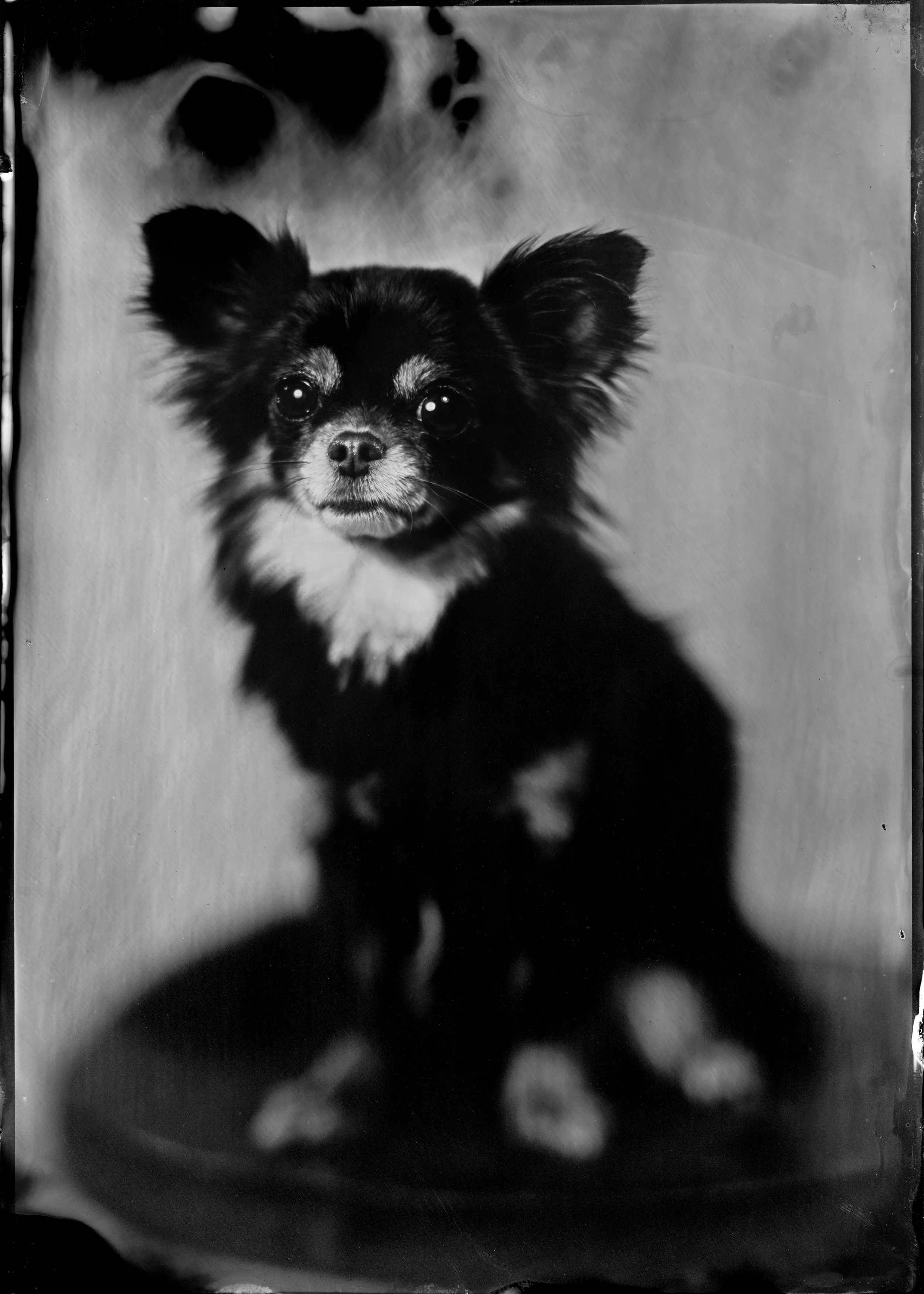
There is also the option of having a semi solo portrait, with the owner partially in the shot, but with the pet being the main subject.

Those are the basic considerations for bringing your best pals into my little studio. And I know what some of you are thinking.. “Where are all the cat portraits!?”
And the answer is.. right here. So far the cat portraits I have done went perfectly. No one was shredded by claws when the flashes went off.
